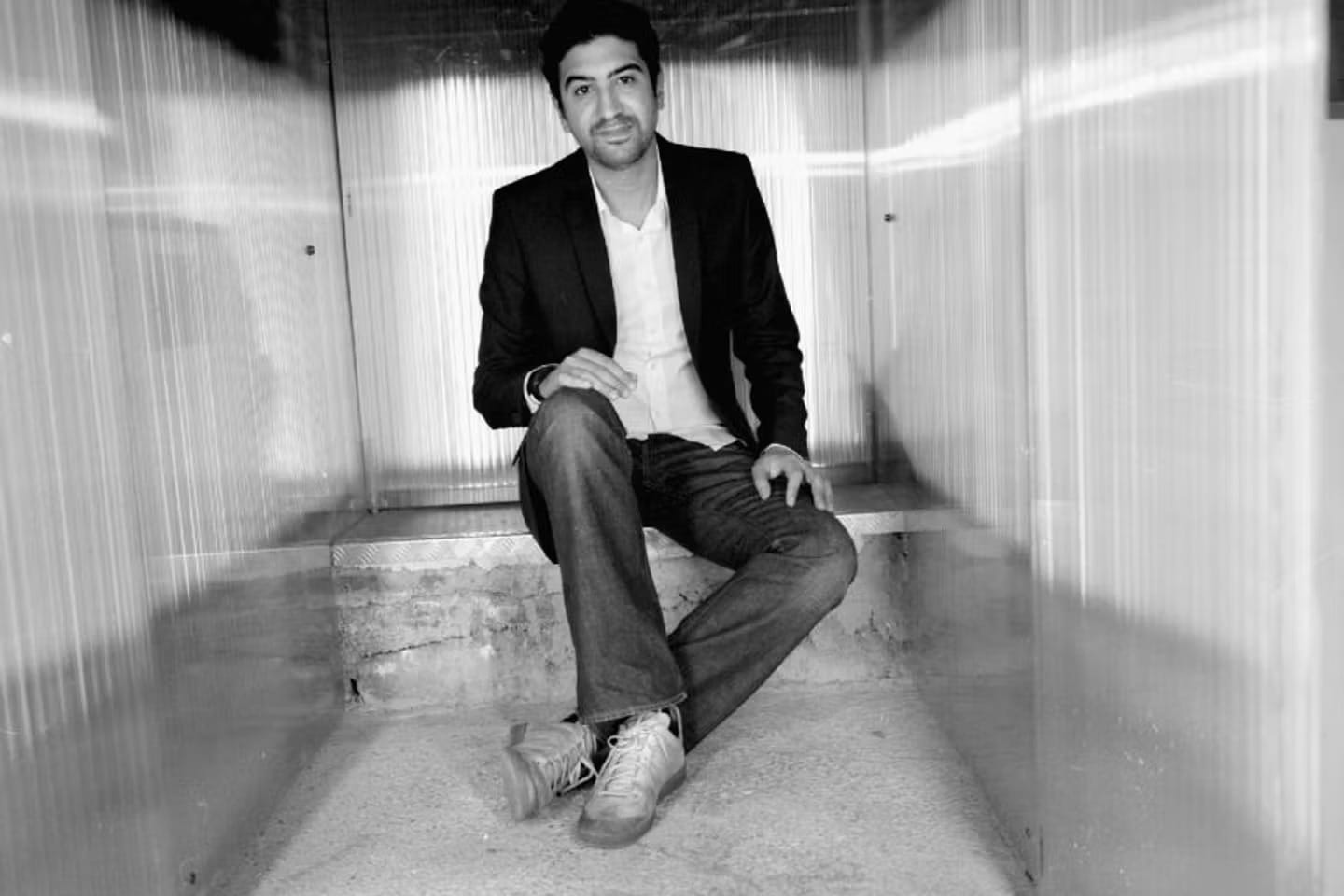
As a kid, I thought I'd become a pianist (I started at four) or maybe a historian (I had a childhood obsession with the Etruscan civilization). Then one day, I stumbled upon a computer that could talk. I was hooked.
"Tariq Krim has been on a journey tackling fundamental problems about our online life."
— TechCrunch
My online journey began in 1982, exploring early databanks like The Source at night from my dad's university Apple II. In 1984, taking advantage of telematic experiments in central Paris, I built my first Minitel server at 12 years old, then later my first BBS server, immersing myself in the underground computer culture of the era.
In the early 90s, I left for San Francisco, covering first for Radio Nova and then La Tribune the birth of the Web and cyberculture — Burning Man, the first virtual reality experiments, the launch of Wired magazine. In 1996, during a stint at Sun Microsystems, I discovered the early premises of cloud computing and fell in love.
Becoming an entrepreneur, I launched in 2000 one of the first blogging platforms and created GenerationMP3, which quickly became the meeting place for everyone interested in new forms of music distribution.
My fight for digital sovereignty began with culture when I saw my own government defending closed music platforms instead of promoting MP3 created in Europe. I helped shape the debate on music with my report "Peer to Peer" and at the same time advised both the independent music labels and movie producers to understand the new distribution paradigm via the Internet.
"Mr. Krim is now cast as a paragon of Europe's new generation of Internet entrepreneurs."
— The Economist
In 2005, I founded Netvibes, one of the first personalized startpages using widgets. Built initially from a coffee shop in Paris, it became the third most popular startpage in the United States, available in over 100 countries, with more than 1,000 media outlets using the technology. In 2007, Netvibes was named one of Time Magazine's 50 best innovations and won the Crunchie Award for Best International Startup.
I was named MIT TR35 (2007) — the first French recipient in computing (alongside Mark Zuckerberg, Garrett Camp and Kevin Rose) — and Young Global Leader by the World Economic Forum (2008).
"Through my products, I want to make the Internet a nicer place to live."
— Tariq Krim
With Romain Huet, I cofounded Jolicloud, which produced the Jolibook — the first computer under €250 with its own web-based operating system (JoliOS) and personal cloud system. It pioneered features that are now standard on devices like Chromebooks and iPads.
In 2008, I co-founded ISAI, the French tech entrepreneurs' fund, which provides seed capital for web and mobile technology startups.
I coined the concept of the "Slow Web," promoting a more mindful and respectful relationship with technology and artificial intelligence.
"One of the pioneers of startup culture in Europe."
— Guillaume Grallet, Le Point
For over two decades, I have been fighting for digital sovereignty in France and Europe. I was part of the expert committee on Net Neutrality created by Secretary of State Nathalie Kosciusko-Morizet. I was involved in the creation of the eG8, the first digital G8 led by President Sarkozy. I served as Vice President of the French National Digital Council under President Hollande and participated in the elaboration of the Digital Republic law. My report on digital talents for the Prime Minister contributed to the creation of La French Tech.
Among my recommendations: promoting French developers, creating a State CTO position, and establishing a visa for digital talents (later implemented as the French Tech Visa).
Early on, I warned about the Internet becoming a geopolitical battlefield, social media harm, disinformation, and epistemic warfare.
I graduated from the University of Paris VII, ENST (Telecom ParisTech), and the Harvard Kennedy School.
Today I run Cybernetica, the first French-language newsletter dedicated to the convergence of technology and geopolitics.
I founded The Sovereign Way, a strategic advisory firm that helps leaders and organizations navigate the new digital uncertainty.
I co-lead Prototype.earth, a product-oriented AI lab.
I co-founded The Media Company, a traditional film studio reimagined for the age of generative AI.